Course Overview
Information Technology has emerged as one of the most transformative and dynamic fields in the modern world, driving innovation across industries through advancements in Artificial Intelligence, Data Science, Cloud Computing, Cyber security, Internet of Things (IoT), and Digital Transformation. Today, IT professionals are not only employed in software companies but also play vital roles in sectors such as banking, healthcare, insurance, manufacturing, e-commerce, education, and smart infrastructure. As organizations increasingly rely on intelligent and data-driven technologies, the demand for skilled IT professionals continues to grow rapidly. Consequently, Information Technology remains a highly sought-after discipline, attracting talented students with strong interests in engineering, innovation, and emerging technologies.
Intake Capacity
120
Affiliated to
MAKAUT
Approved by
AICTE
[80% students are admitted from WBJEE, 10% from JEE (MAIN), 10% from Management Quota + 6 students are from TFW Quota]
Additional 12 Students can be admitted in 3rd Semester through JELET (Lateral Entry Admission)
Course Enquiry
Enter Your Name*
Enter Your Mobile No*
Enter Your Email Id*
Enter Your Enquiry*
Eligibility Criteria for Admission
  • Candidates must have valid WBJEE / JEE (Main) Score.

  • Candidates must have passed the qualifying examination (10+2) with Physics and Mathematics along with Chemistry / Biotechnology / Biology / Computer Science / Computer Applications / Technical Vocational subjects with individual pass marks (in both theory and practical, wherever applicable) in all three subjects as stated above in regular class mode.
  • Candidates must have obtained at least 45% marks (40% in case of SC, ST, OBC, PwD) in all the three subjects taken together. As mentioned in Table 8.4 in AICTE Approval Process Handbook-2024, and as annexed (Appendix-7).
  • Candidates must have passed English in “10+2” examination with at least 30% marks.
  • The board of qualifying examination must be recognized either by the Central or State Government.
  • Both B.Sc. Candidates and Diploma holders in Engineering & Technology will also be eligible for admission to the 1st year Engineering Degree Courses, subject to vacancies in the 1st year classes in case the vacancies as lateral entry at second year are exhausted. However, the admission shall be based strictly on the eligibility criteria as mentioned above.
Our Vision
The vision of Information Technology department is to be a recognized leader in Information Technology education in support of teaching and learning and to be the preferred source of quality technology education, research and community services delivery for the local, national and international levels.
Our Mission
  • To build a quality and cutting edge technology infrastructure.
  • To establish and maintain an effective academic environment.
  • To deliver quality, prompt and reliable technology education services aligning with the Institute’s mission in teaching and learning.
  • To engage in emerging research areas and establishing leadership.
  • To contribute to the community services at large as well as catering to socio-economic goals in local and national levels.
Programme Educational Objective
  • PEO1: The graduates of Information Technology program will acquire a strong background in basic & contemporary science and ability to use these tools in Information Technology.
  • PEO2: The graduates of Information Technology program will demonstrate technical and research competence in various fields of Information Technology and allied areas.
  • PEO3: The graduates of Information Technology program will attain professional and entrepreneurial excellence through life-long learning.
  • PEO4: The graduates of Information Technology program will imbibe ethical and moral behaviour.
Programme Outcomes
Information Technology Engineering Graduates will be able to:

  • PO-I: Engineering Knowledge: Apply knowledge of mathematics, natural science, computing, engineering fundamentals and an engineering specialization as specified in WK1 to WK4 respectively to develop to the solution of complex engineering problems.
  • PO-II: Problem Analysis: Identify, formulate, review research literature and analyze complex engineering problems reaching substantiated conclusions with consideration for sustainable development. (WK1 to WK4)
  • PO-III: Design/Development of Solutions: Design creative solutions for complex engineering problems and design/develop systems/components/processes to meet identified needs with consideration for the public health and safety, whole-life cost, net zero carbon, culture, society and environment as required. (WK5)
  • PO-IV: Conduct Investigations of Complex Problems: Conduct investigations of complex engineering problems using research-based knowledge including design of experiments, modelling, analysis & interpretation of data to provide valid conclusions. (WK8).
  • PO-V: Engineering Tool Usage: Create, select and apply appropriate techniques, resources and modern engineering & IT tools, including prediction and modelling recognizing their limitations to solve complex engineering problems. (WK2 and WK6)
  • PO-VI: The Engineer and The World: Analyze and evaluate societal and environmental aspects while solving complex engineering problems for its impact on sustainability with reference to economy, health, safety, legal framework, culture and environment. (WK1, WK5 and WK7).
  • PO-VII: Ethics: Apply ethical principles and commit to professional ethics, human values, diversity and inclusion; adhere to national & international laws. (WK9)
  • PO-VIII: Individual and Collaborative Team work: Function effectively as an individual, and as a member or leader in diverse/multi-disciplinary teams.
  • PO-IX: Communication: Communicate effectively and inclusively within the engineering community and society at large, such as being able to comprehend and write effective reports and design documentation, make effective presentations considering cultural, language, and learning differences
  • PO-X: Project Management and Finance: Apply knowledge and understanding of engineering management principles and economic decision-making and apply these to one’s own work, as a member and leader in a team, and to manage projects and in multidisciplinary environments.
  • PO-XI: Life-Long Learning: Recognize the need for, and have the preparation and ability for i) independent and life-long learning ii) adaptability to new and emerging technologies and iii) critical thinking in the broadest context of technological change. (WK8)
Programme Specific Outcomes
Information Technology Engineering Graduates will be able to:

  • PSO – I: Understand, analyze and develop computer programs for efficient analysis and design of computer-based systems.
  • PSO – II: Apply standard practices and strategies in software development.
  • PSO – III: Employ modern computer languages, software tools and platforms in creating innovative career paths to be a successful professional.
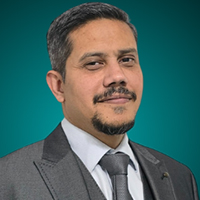
Faculty Members
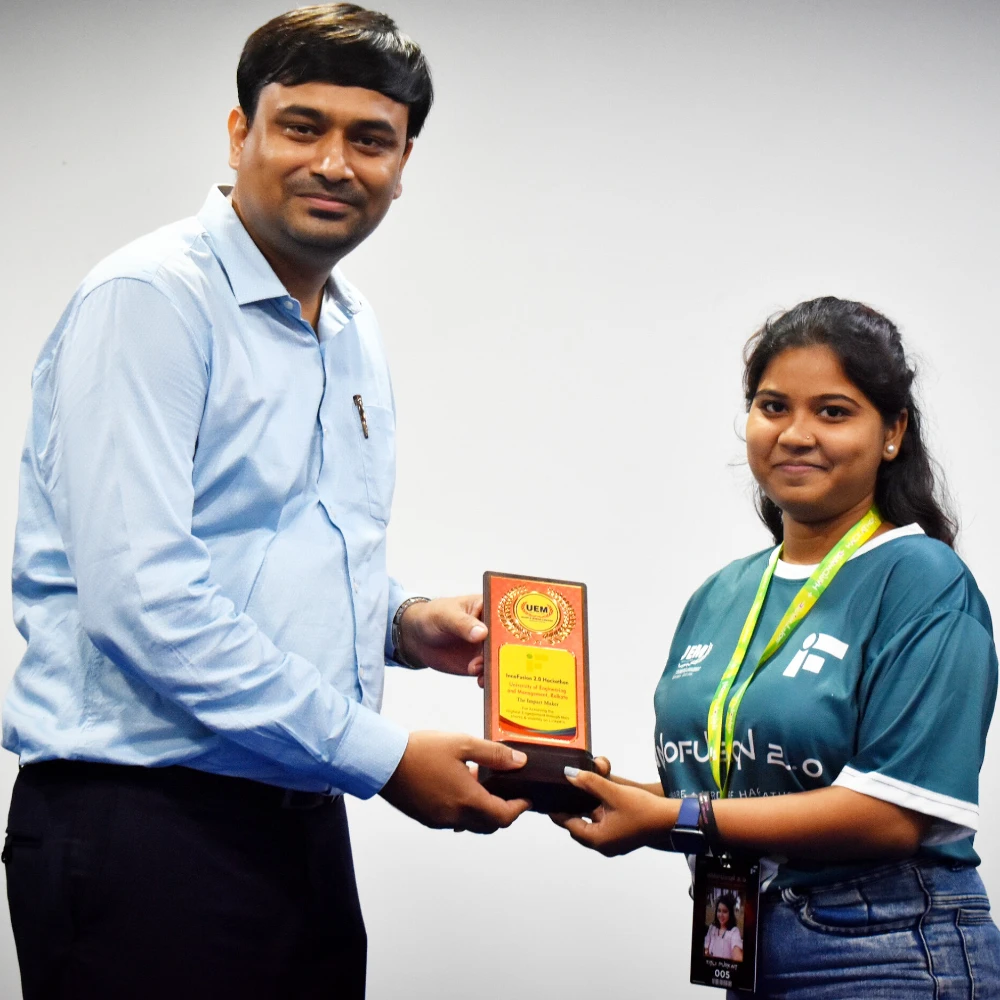
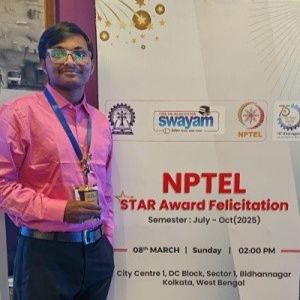
Student Achievements
Corporate Tie-Ups
Our Recruiters
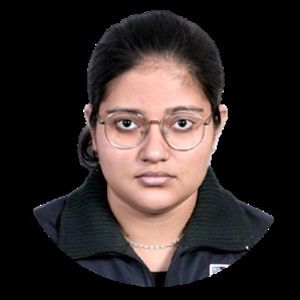
Success Stories - Alumni
Faculty Contributions
Research and Development Publications Journal Publications AY : 2021-22
  • P. Jana, A. Phadikar, and H. Mandal, “FPGA based implementation of reversible data hiding scheme for content verification and quality access control of image,” International Journal of Signal and Imaging Systems Engineering, vol. 12, no. 3, pp. 93–107, Sep. 2021.

AY : 2022-23
  • S. Sengupta, A. Dutta, S. A. M. Abdelmohsen, H. A. Alyousef, and M. Rahimi-Gorji, “Development of a rice plant disease classification model in big data environment,” Bioengineering, vol. 9, no. 12, p. 758, 2022, doi: 10.3390/bioengineering 9120758.

Latest Events